Why Waterproofing Is Critical in Singapore
Singapore receives about 2,300mm of rain per year. That is more than double the global average. Combine that with high humidity and intense sun, and you have one of the harshest environments for building materials anywhere in the world.
Waterproofing is your building's first line of defence. When it fails, water enters the structure, causing mould, concrete deterioration, rebar corrosion and expensive interior damage. In this guide, we explain the different types of waterproofing, where they are used, and how to tell when yours needs attention.
What Is Waterproofing?
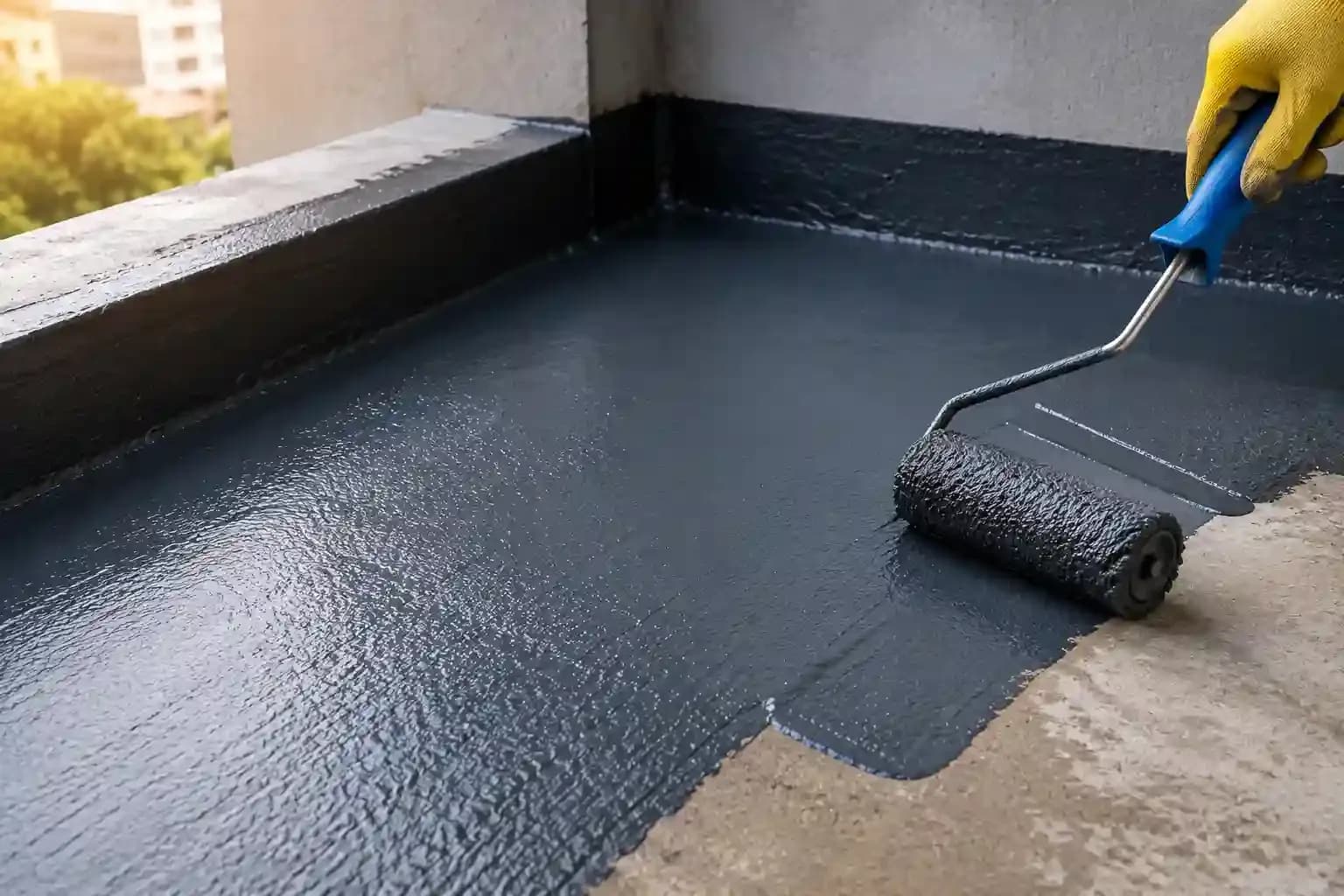
Waterproofing is the process of making a surface or structure water-resistant so that water cannot penetrate it. It is applied to roofs, walls, balconies, bathrooms, planter boxes, water tanks and more.
There is no single waterproofing material that works everywhere. Different substrates and exposure conditions require different systems.
Types of Waterproofing Systems
1. Cementitious Waterproofing
Cement-based coatings that are mixed with water and applied like paint. They are rigid and bond well to concrete. Commonly used in bathrooms, water tanks and wet areas.
Pros: Easy to apply, affordable, good for internal wet areas.
Cons: Rigid — cracks if the substrate moves.
2. PU (Polyurethane) Membrane
Liquid-applied membranes that cure into a seamless, elastic film. They can bridge hairline cracks and are excellent for roofs, balconies and planter boxes.
Pros: Seamless, flexible, good crack-bridging.
Cons: Sensitive to moisture during application.
3. Torch-On Membrane
Bituminous sheets that are heat-fused to the substrate. They form a tough, thick barrier. Commonly used on flat RC roofs and podiums.
Pros: Very durable, excellent for flat roofs.
Cons: Requires skilled application, seams can fail if poorly done.
4. PU & Epoxy Injection Grouting
Resins injected under pressure into cracks and joints. They expand and seal active leaks. Used for walls, slabs and ceilings.
Pros: Stops active leaks quickly, minimally invasive.
Cons: Not a surface waterproofing solution — treats the crack, not the whole area.
5. Acrylic & Elastomeric Coatings
Water-based coatings that form a flexible, UV-resistant film. Often used on external walls and roofs. They reflect heat and are easy to recoat.
Pros: UV stable, breathable, affordable.
Cons: Thinner than membranes, needs recoating every few years.
Where Waterproofing Is Needed
- Roofs: RC flat roofs, tiled roofs, metal roofs, planter boxes, RC gutters
- External walls: Facades, parapets, window perimeters, expansion joints
- Balconies & terraces: Floor slabs, planter boxes, railings
- Bathrooms & kitchens: Floor slabs, wet areas, shower niches
- Water features: Pools, fountains, ponds
- Basements: Retaining walls, floor slabs
Signs Your Waterproofing Is Failing
- Damp patches or stains on ceilings and walls
- Paint peeling or bubbling
- Mould or musty smells
- Water ponding on roofs or balconies
- Concrete spalling or rust stains
- Efflorescence (white powder) on walls
If you notice any of these, get a professional inspection before the damage spreads.
How Waterproofing Is Applied
- Surface preparation: Clean the surface, remove loose material, repair cracks and prime.
- Detailing: Treat corners, joints, pipe penetrations and drains with reinforcing tape or sealant.
- Application: Apply the chosen system in the specified number of coats and thickness.
- Curing: Allow adequate curing time before foot traffic or ponding.
- Testing: Ponding test or moisture test to confirm performance.
- Protection: Apply screed or protective layer if required.
Cost of Waterproofing in Singapore
Costs vary by area, system and accessibility. As a rough guide:
- Bathroom waterproofing: $800 – $2,000
- Balcony waterproofing: $1,200 – $3,000
- Roof waterproofing (RC flat): $8 – $20 per square foot
- External wall coating: $4 – $10 per square foot
- Injection grouting: $300 – $800 per point
These are estimates only. Always get a fixed quotation after a site inspection.
Warranties
Reputable waterproofing contractors offer warranties ranging from 1 to 7 years, depending on the system. A warranty should cover both materials and workmanship. Read the terms carefully — some exclude damage caused by structural movement or lack of maintenance.
How to Choose a Waterproofing Contractor
- Ask for proof of past projects
- Ensure they provide a written quotation with system details
- Check that they carry out proper surface preparation
- Confirm they will do a ponding test
- Ask about warranty terms
- Avoid contractors who quote unusually low prices — they often cut corners
Final Thoughts
Waterproofing is not a one-size-fits-all product. The right system depends on the substrate, exposure and budget. Proper preparation and application are just as important as the material itself.
BH Supply Pte Ltd provides waterproofing for roofs, walls, balconies and wet areas across Singapore. We offer free inspections and honest recommendations. Call or WhatsApp 8588 9230 to book yours.