Introduction: Your Building Is Under Constant Attack
Singapore's climate is brutal on buildings. Constant humidity, heavy rain, intense UV and salt-laden air (especially near the coast) accelerate wear and tear. Without regular maintenance, small defects quickly become major problems.
In this article, we explain why planned building maintenance is essential, what it should include, and how it saves you money in the long run.
What Happens Without Regular Maintenance
- Waterproofing fails: Membranes degrade, cracks form, and leaks start.
- Gutters block: Leaves and debris cause water to pond on roofs and overflow down walls.
- Sealant degrades: Joints open up, letting water into the structure.
- Concrete spalls: Water reaches rebar, causing rust and concrete cancer.
- Mould and algae grow: Damp surfaces become breeding grounds for mould.
- Paint peels: UV and moisture break down coatings.
- Fixtures loosen: High winds and thermal movement take their toll.
All of these are far cheaper to prevent than to repair.
What Regular Building Maintenance Includes
1. Facade Inspection
Regular inspection of external walls, cladding, windows and sealant joints. Cracks are identified and repaired before water penetrates.
2. Roof and Gutter Maintenance
Clearing gutters and downpipes of leaves and debris. Checking roof membranes, flashings and drainage falls. This prevents ponding and water damage.
3. Waterproofing Upkeep
Re-coating exposed waterproofing, patching blisters, and re-sealing joints. Waterproofing has a lifespan — maintenance extends it.
4. Sealant Replacement
Replacing degraded sealant at expansion joints, window frames and panel interfaces. This is one of the most cost-effective maintenance tasks.
5. High-Rise Repairs
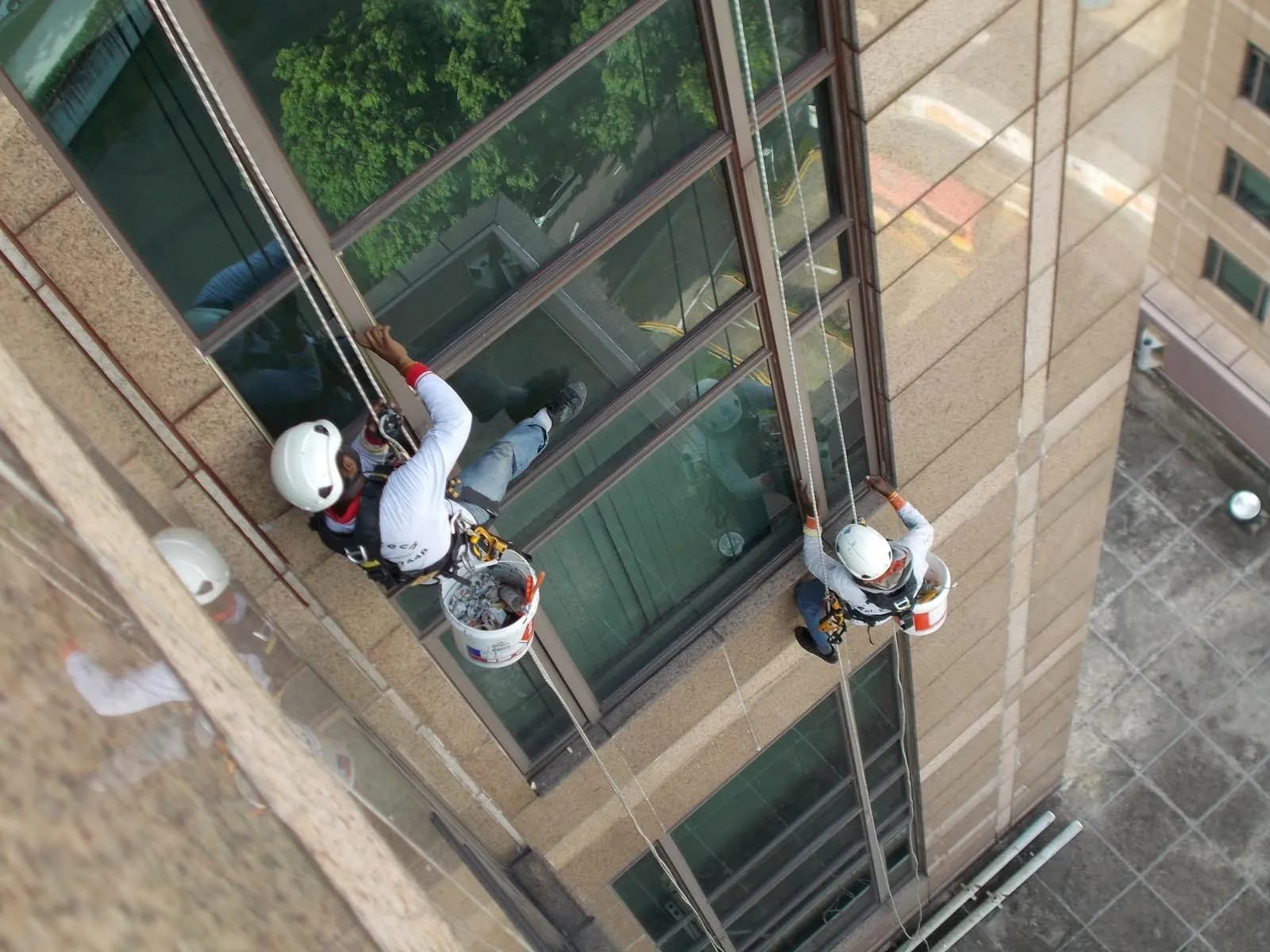
Using rope access to repair facade defects, paint, seal and waterproof at height without scaffolding.
6. Drainage and Ponding Checks
Ensuring water drains away from the building. Ponding is a major cause of leaks and structural damage.
7. Inspection Reports
Documenting condition with photos and recommendations. This is essential for MCSTs and property managers.
How Often Should You Maintain Your Building?
- Gutter clearing: Every 3–6 months
- Facade inspection: Annually
- Waterproofing inspection: Annually
- Sealant check: Annually
- Full building condition survey: Every 3–5 years
Buildings near the coast or with heavy tree cover need more frequent attention.
The Cost of Neglect vs. Planned Maintenance
Reactive repairs are almost always more expensive than planned maintenance. For example:
- Clearing a blocked gutter costs a few hundred dollars. Repairing water damage from an overflow can cost thousands.
- Replacing sealant costs a few hundred dollars. Repairing concrete spalling caused by water ingress can cost tens of thousands.
- Early leak detection costs a few hundred dollars. Re-waterproofing a failed roof costs thousands.
Planned maintenance also avoids emergency call-out fees and disruption to tenants.
Benefits of a Maintenance Contract
- Priority response: Contract clients get faster service for urgent issues.
- Consistent records: Documentation for MCST, audits and insurance.
- Budget predictability: Spread costs over the year instead of sudden large bills.
- Longer asset life: Your building lasts longer and retains value.
- Peace of mind: You know your building is being looked after.
Choosing a Building Maintenance Contractor
- Ask for references from similar buildings
- Ensure they have rope access capability for high-rise work
- Check they provide photo reports and documentation
- Confirm they carry insurance and follow WSH regulations
- Look for a contractor who offers both planned and emergency services
Final Thoughts
Building maintenance is not a cost — it is an investment. In Singapore's climate, regular upkeep is the only way to protect your property from water damage, structural deterioration and expensive emergency repairs.
BH Supply Pte Ltd provides planned building maintenance for condominiums, commercial buildings and landed properties across Singapore. We offer customised schedules, photo reports and rope access crews. Call or WhatsApp 8588 9230 to discuss a maintenance plan.